When you purchase camp shelters or bedding through links on Trail Cipher, we may earn an affiliate commission at no extra cost to you. How Trail Cipher earns affiliate commissions
Sleeping off the ground transforms camp comfort. By elevating your sleep surface, a camping cot eliminates the discomfort of sharp rocks, uneven dirt, and tree roots while providing a natural seated height for changing clothes and putting on boots. Inside a tent, it also frees up usable floor space underneath for gear bins, dry bags, and packs.
However, cots introduce logistical trade-offs that ground pads do not. They add bulk and mechanical complexity to your shelter setup, demand careful headroom planning inside tents with angled walls, and change the thermal mechanics of how you sleep. Choosing the right design depends on whether your priority is vehicle-accessible comfort, minimal pack volume, or maximum sleeping width.
Elevating off the ground protects you from direct conductive heat loss into cold soil, but it exposes the underside of your cot to moving ambient air. As cold air circulates beneath the fabric, convective heat loss quickly strips body heat through compressed sleeping bag insulation. For cool or freezing conditions, layering a closed-cell foam or insulated sleeping pad on top of the cot creates an essential thermal barrier.
Core Cot Configurations: Low-Profile vs. High-Rise
Most modern portable camping cots fall into one of two functional frame profiles. Matching the frame architecture to your shelter dimensions prevents unexpected gear clashes at camp.
- Low-Profile Tension Cots (10 to 18 cm clearance): Designed primarily for backpacking, small backpacking tents, and low-angle shelter walls. They feature longitudinal shock-corded side poles supported by three to five arched cross-bars. By keeping you close to the ground, they fit easily beneath steep tent ceilings without forcing your sleeping bag against condensation-prone rainflies.
- Dual-Height and High-Rise Cots (30 to 40 cm clearance): Built for cabin tents, outfitter canvas lodges, and vehicle-based basecamps. These frames often incorporate leg extensions or scissor-folding uprights. The generous under-bed space provides substantial luggage storage and creates a chair-like seat, though they require vertical tent sidewalls and carry noticeable weight penalties.
Featured Marketplace Camping Cots
The following listings represent different frame geometries, widths, and pack formats currently available for car camping and lightweight shelter setups. Specifications reflect seller-advertised listing details and visible frame configurations.
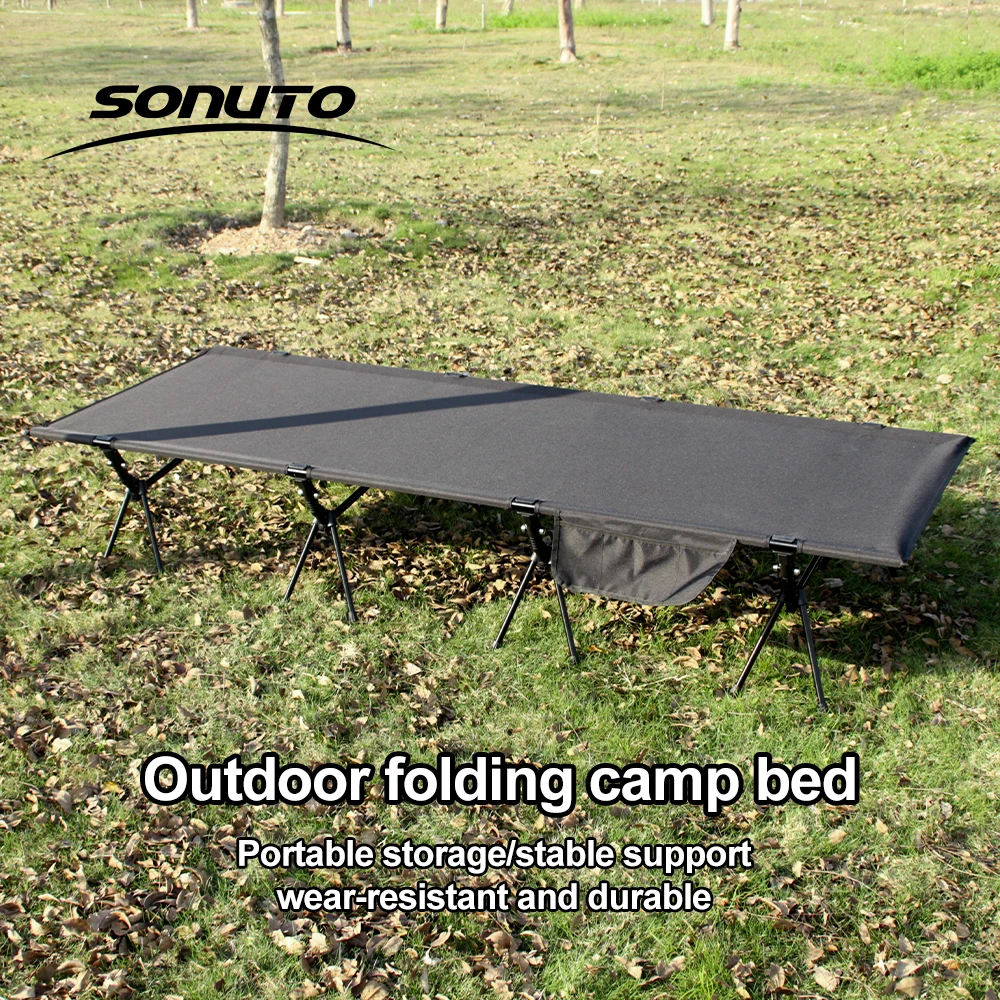
The Sonuto 210x80cm Oxford Camping Cot is aimed at campers who prioritize expansive sleeping space over ultralight packability. Its advertised 210 cm length and 80 cm width provide generous shoulder and leg room for taller adults who frequently feel cramped on standard 60-to-65 cm camp beds. The seller lists a 600D Oxford fabric deck and an overall weight of roughly 4 kg, utilizing a multi-leg frame with vertical extenders visible in listing photos for raised ground clearance.
- Best for: Car campers, taller individuals, and basecampers seeking elevated off-ground storage in spacious tents.
- Key limitation: At a stated 4 kg, this cot is too heavy and bulky for human-powered trail hauling.
- Buyer verification: Confirm the assembled height with and without the leg extensions to ensure it clears your tent's sloped ceiling.
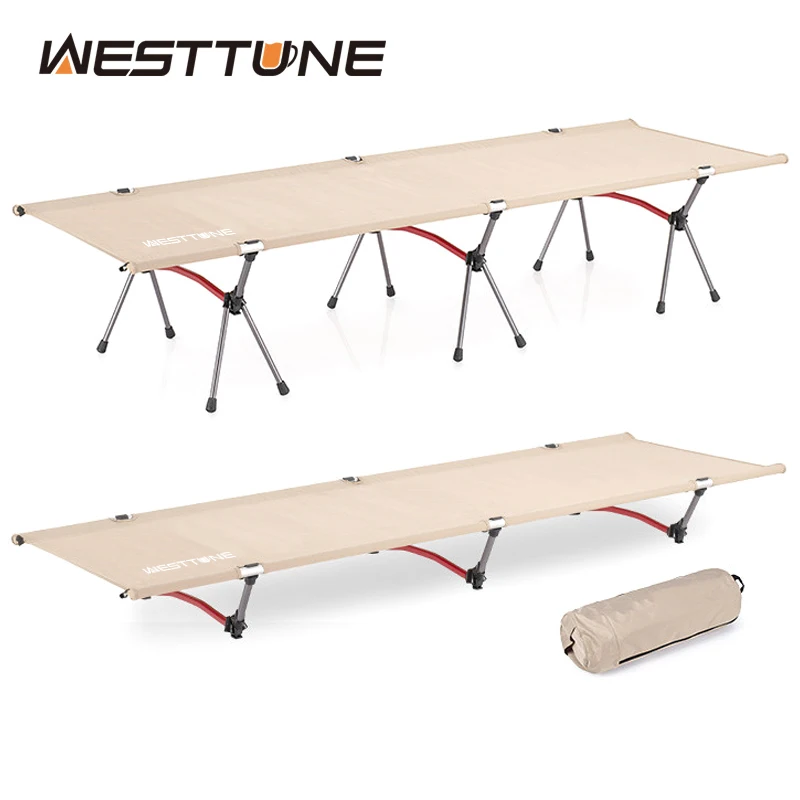
Advertised by the WEST TUNE Choice Store, the WESTTUNE Ultralight Aluminum Alloy Sleeping Cot showcases a convertible leg structure with arched tension supports and optional height-extension risers. The listing claims an aluminum alloy frame and lightweight packability for hiking and travel, making it an adaptable bridge between a compact floor sleeper and a raised vehicle-camp bunk.
- Best for: Campers who want the flexibility of low-profile pitching in small shelters and elevated setup in cabin tents.
- Key limitation: Ultralight aluminum frames with convertible legs require deliberate locking-lever engagement to maintain tension across the side rails.
- Buyer verification: Check whether the leg extender kit is included in the base purchase or sold as a separate add-on variant.
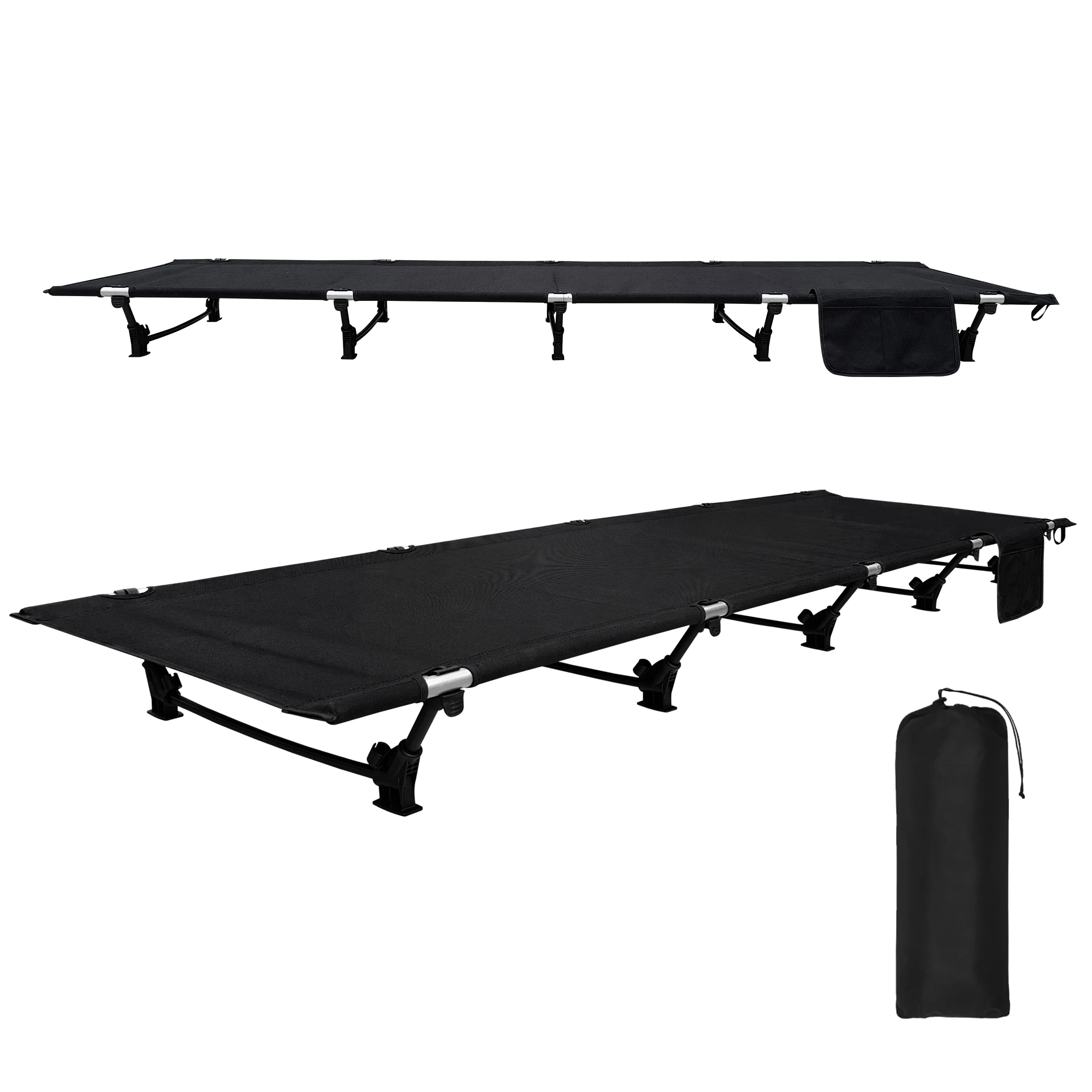
The LIFEWITHCAMP Compact Tent Sleeping Cot uses a low-profile five-bracket undercarriage that spreads user weight evenly across five ground-contact points. By keeping the bed surface close to the tent floor, this design maximizes headroom in small backpacking or dome tents while remaining light enough for short excursions.
- Best for: Dome tents, roof-tent interiors, and solo campers looking for a streamlined, ground-skimming frame.
- Key limitation: Minimal under-cot storage clearance compared to extended leg designs.
- Buyer verification: Inquire about the exact packed dimensions and total carry weight, as specific measurements are omitted from the basic title listing.
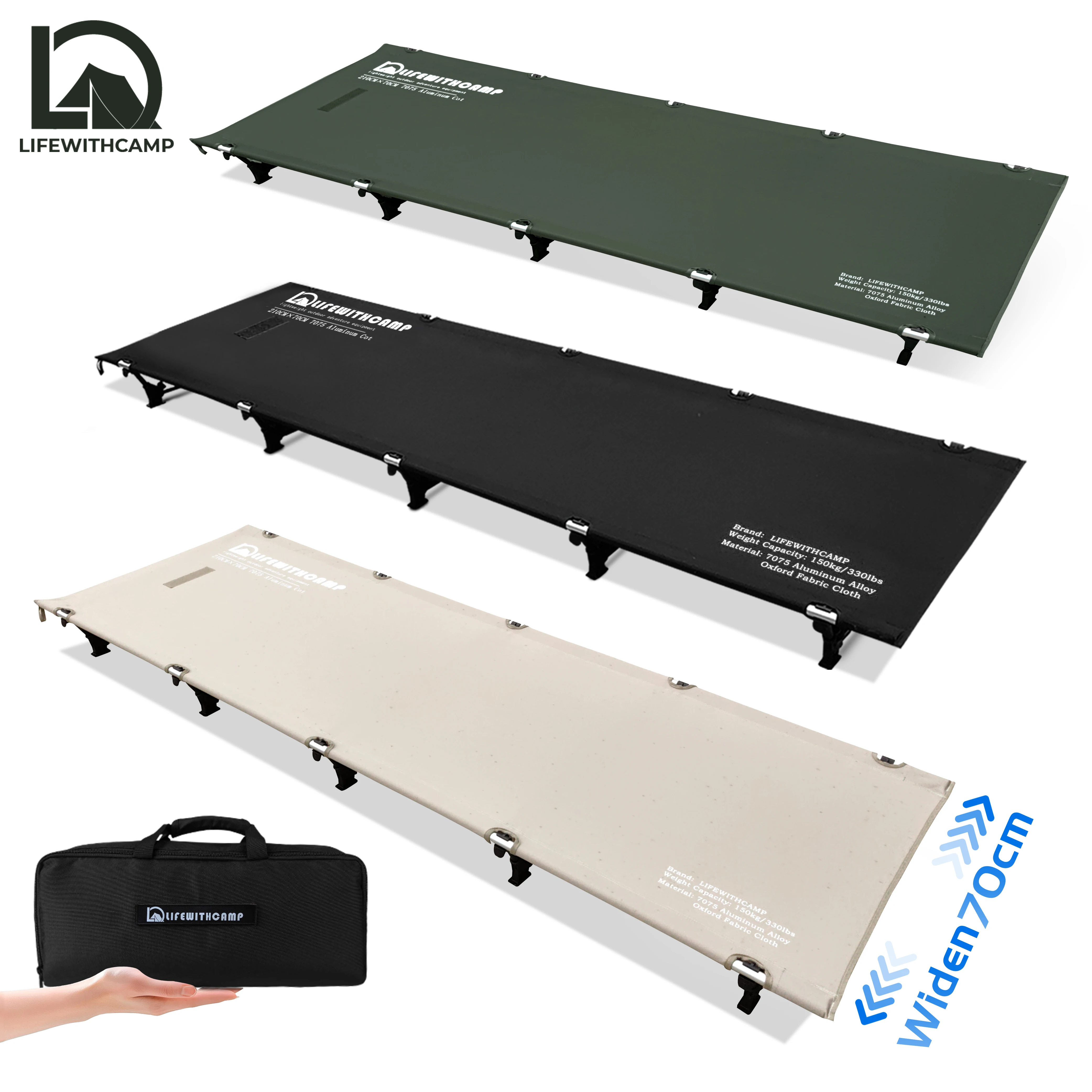
The 70cm Wide Portable Folding Cot (carrying LIFEWITHCAMP markings in seller images) balances shoulder room and packed volume. Fabric markings displayed on the listing advertise a 7075 aluminum alloy frame, 70 cm width, and a 150 kg (330 lb) stated weight capacity. It employs a three-bracket mechanical lever-tension system that locks the cross-bars into place without requiring brute hand strength during setup.
- Best for: Campers who find standard 60 cm widths restrictive but still need a compact, transportable packed footprint.
- Key limitation: Three-point cross supports concentrate floor pressure more heavily than frames with five ground contact arches.
- Buyer verification: Check the seller's specific package contents to confirm whether side accessory pockets or replacement feet are provided.
| Listing / Model | Stated Width | Claimed Frame / Fabric | Design Profile | Primary Consideration |
|---|---|---|---|---|
| Sonuto 210x80cm Cot | 80 cm (advertised) | 600D Oxford / 4 kg claimed weight | Extended height with leg risers | Max sleeping room; check vehicle trunk space. |
| WESTTUNE Ultralight Cot | Not specified | Aluminum alloy frame | Dual-height / convertible arches | Verify if leg extension poles are included in selected variant. |
| LIFEWITHCAMP Compact Cot | Not specified | Folding aluminum structure | 5-bracket low-clearance base | Spreads load across 5 feet; low headroom friendly. |
| Stone's Store 70cm Cot | 70 cm (advertised) | 7075 aluminum / Oxford cloth (label claim) | 3-lever tension system | Stated 150 kg rating; wider than standard compact beds. |
Critical Factors Before You Buy
1. Tent Wall Clearance and Slope
A cot's footprint on paper does not account for tent wall taper. In standard dome or wedge tents, walls slant inward aggressively. Placing a 35 cm high cot directly against a tent wall pushes the head and foot of your sleeping bag against the shelter fabric, causing moisture transfer from condensation. Always measure your tent’s internal length at your cot's intended elevated height rather than along the ground seam.
2. Protecting Your Tent Floor
Unlike flat sleeping pads that distribute body weight across tens of square feet, a cot concentrates total occupant weight onto 6 to 12 small contact feet. On damp soil or sharp gravel, these feet can puncture lightweight bathtub floors. To protect your shelter:
- Inspect the cot footings for sharp manufacturing burrs or exposed metal edges before taking them into the field.
- Place protective coasters, foam swatches, or folded camp towels beneath each leg inside lightweight silnylon tents.
- Ensure feet sit flat rather than tilted, which concentrates force onto thin plastic edges.
3. Tension Mechanisms and Assembly Effort
Ultralight cots rely on tightly stretched fabric to support your weight without sagging in the middle. Budget and ultralight models achieve this through either manual spring-wire flex or mechanical lever-lock clamps. Mechanical lever clamps make assembly and breakdown significantly faster and reduce the finger strain associated with bending spring rods under high tension.
Buyer Verification Checklist
- Check the exact variant selection: Listings often show both low and high configurations in marketing photos. Confirm whether the leg extender pegs are bundled or sold as a separate accessory.
- Review the true packed dimensions: For canoe camping, motorcycle touring, or trunk packing, length in the stuff sack matters as much as assembled size.
- Verify rated load capacity: Do not guess weight limits based on frame appearance. Look for manufacturer-rated static weight limits and allow a safety margin for movement and gear.
- Plan your thermal layer: If camping in temperatures below 15°C (60°F), pack an insulated mat or closed-cell foam pad to line the cot deck before laying down your sleeping bag.