When you purchase camp shelters or bedding through links on Trail Cipher, we may earn an affiliate commission at no extra cost to you. How Trail Cipher earns affiliate commissions
A dependable camping mattress does two distinct jobs: it cushions pressure points against hard ground, and it creates a thermal barrier so the earth beneath your tent does not siphon away body heat. Getting your sleep system right depends heavily on how you travel—whether every ounce goes into a backpack, or every extra inch of comfort fits in the back of your car.
Key Factors When Choosing a Camping Sleep System
Before selecting a mat, consider your sleep posture, expected overnight temperatures, and how much volume you can realistically transport:
- Thickness and Sleeping Posture: Back sleepers often rest comfortably on 2-inch to 2.5-inch pads because body weight is distributed across a wider surface area. Side sleepers usually need 3 to 4 inches of loft to keep hips and shoulders from bottoming out against the ground.
- Thermal Insulation and Stated R-Value: An uninsulated air chamber circulates cold ambient air underneath you throughout the night. Thermal resistance in camp mattresses is typically evaluated using guarded hot-plate standards such as ASTM F3340. An uninsulated pad (R-value under 2.0) is best suited for warm summer nights, whereas pads with stated R-values of 3.5 to 4.5+ help retain warmth in crisp shoulder-season and cool-weather conditions.
- Packed Volume vs. Field Convenience: Self-inflating open-cell foam pads and thick 4-inch cushions offer plush support similar to a home mattress, but they pack down much larger. Ultralight lattice-style air pads roll down to water-bottle dimensions, making them better for trail miles.
- Inflation Style: Built-in foot or hand pumps eliminate the need to blow moisture into the pad from your lungs. For high-volume pads and double mattresses, compact battery-powered micro-pumps save substantial setup time.
Featured Sleep Gear and Mattress Options
The options below highlight distinct setups, from insulated solo backpacking pads and extra-thick single mats to two-person layouts and portable inflation gear.
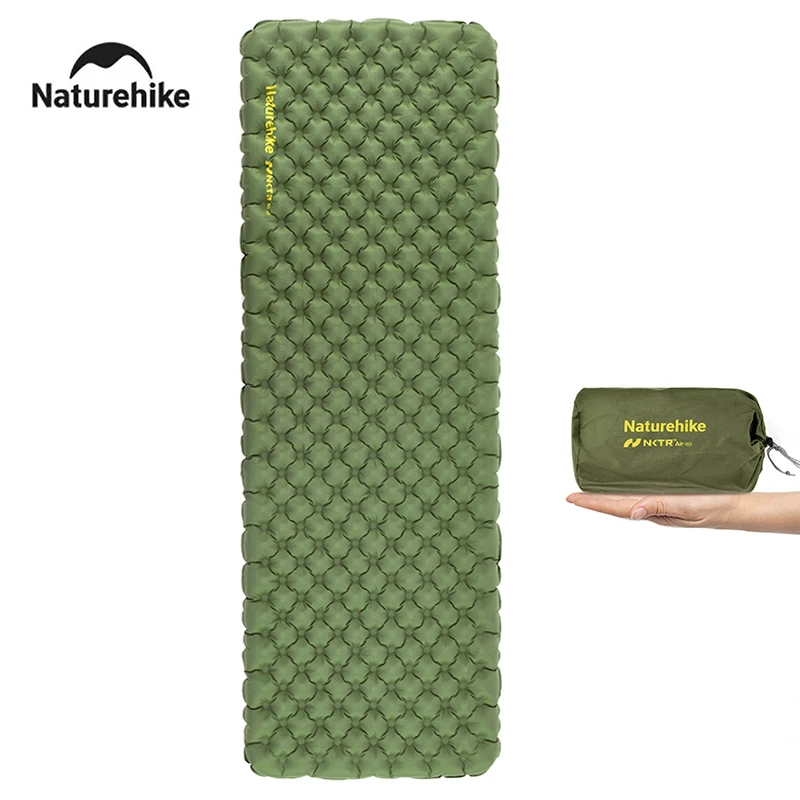
Naturehike Ultralight High R-Value Air Mattress
For shoulder-season trips and cooler alpine nights, this air mattress is advertised with a 4.6 R-value rating to slow ground heat transfer while maintaining a compact folding size. The dimpled lattice baffle structure distributes body weight evenly across the surface.
- Best suited for: Hikers, bikepackers, and tent campers seeking thermal insulation without car-camping bulk.
- Purchase check: The exact weight, rolled dimensions, and valve adapter compatibility should be confirmed directly on the seller page prior to ordering for weight-critical trips.
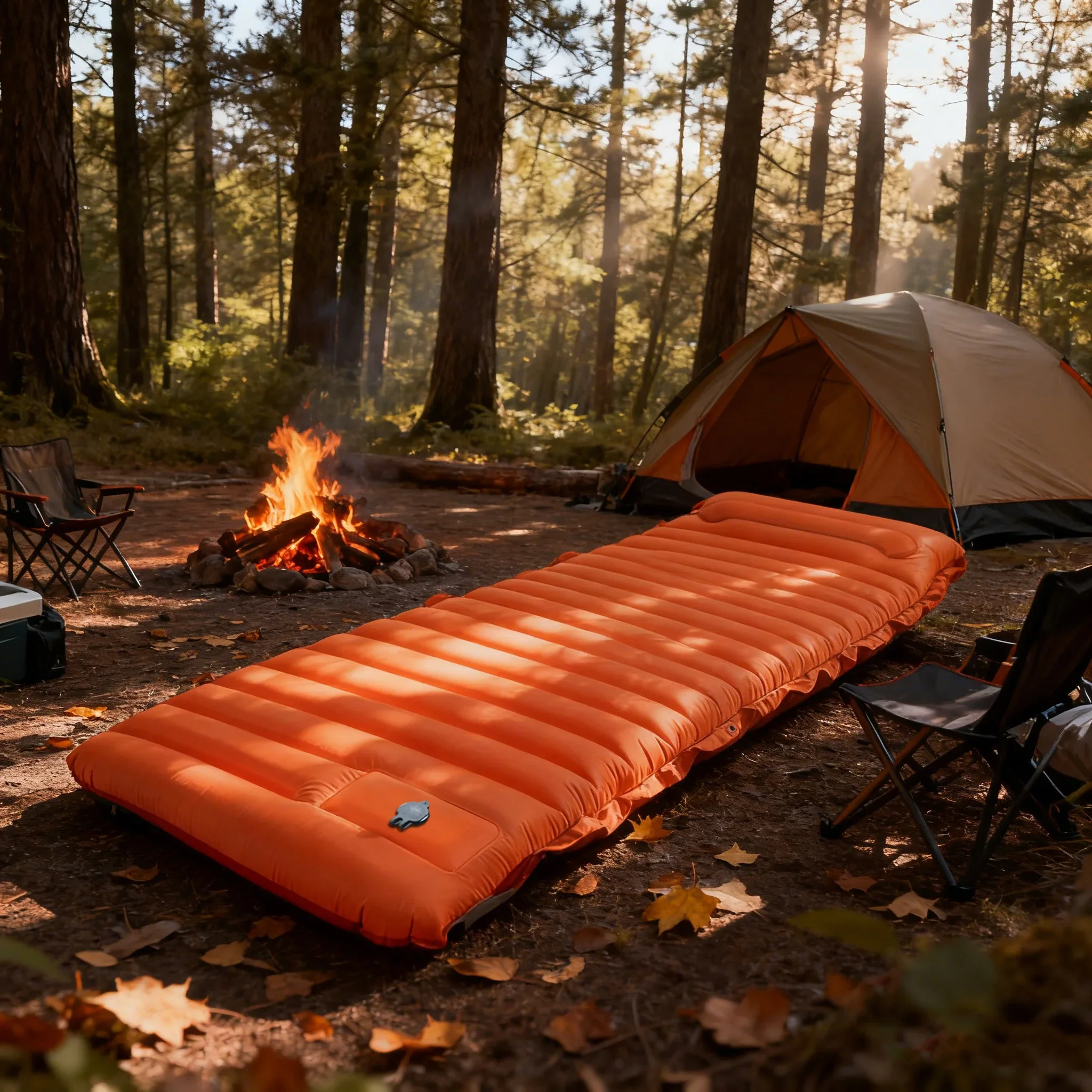
Extra Thick 4-Inch Spliceable Self-Inflating Sleeping Pad
Side sleepers and car campers prioritizing cushioned loft over minimal pack size will appreciate this 4-inch deep mattress profile. It features side snap connectors, allowing two identical units to splice together into a shared sleeping platform.
- Best suited for: Vehicle camping, basecamp tents, and side sleepers who want deep cushion off the terrain.
- Purchase check: Stated foam core composition, packed roll diameter, and exact weight are not fully listed; verify total packed bulk if interior cargo space is limited.
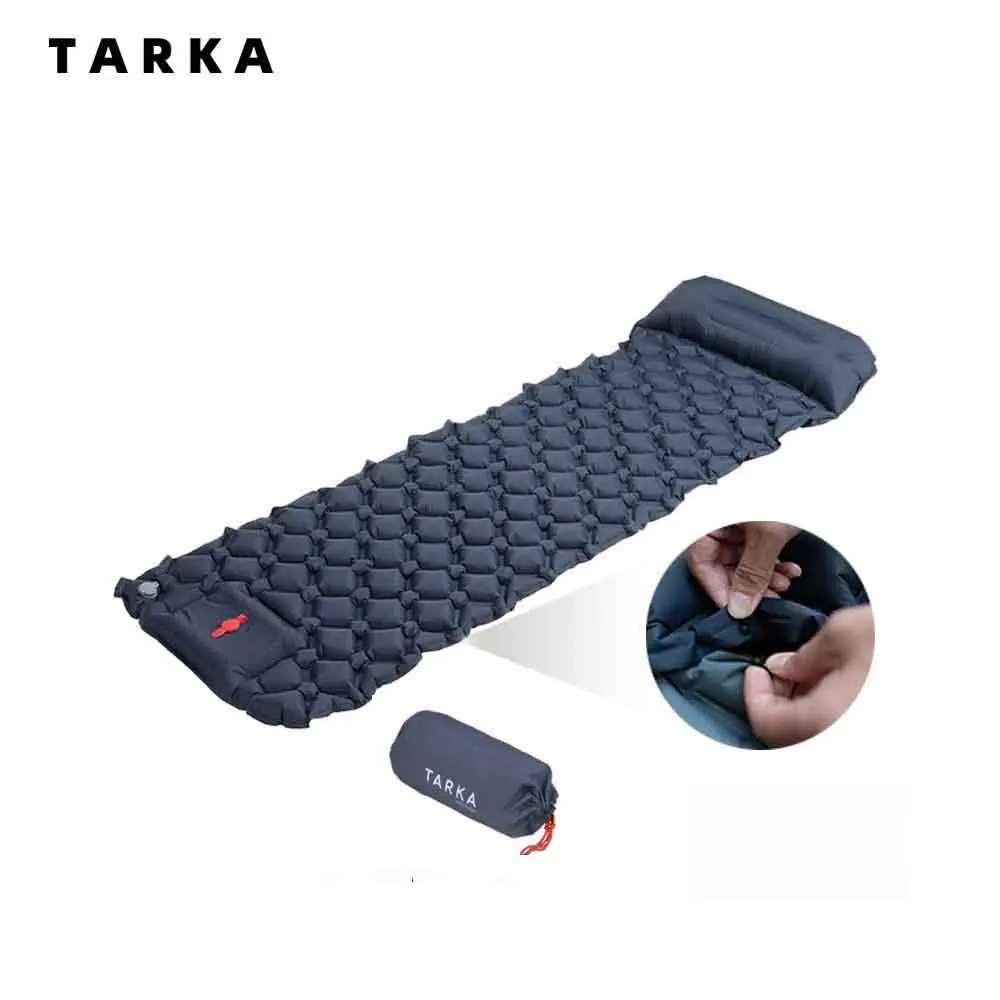
TARKA Inflatable Sleeping Pad with Integrated Pillow
An entry-level option featuring a contoured headrest pillow and textured air cells. It offers a lightweight, straightforward barrier for warm-weather campouts, music festivals, and casual trail overnights.
- Best suited for: Warm summer camping and budget-conscious outdoor trips where minimal pack weight is desired.
- Purchase check: Stated R-value and fabric denier are unlisted; check with the merchant if you plan to camp in temperatures below 50°F (10°C).
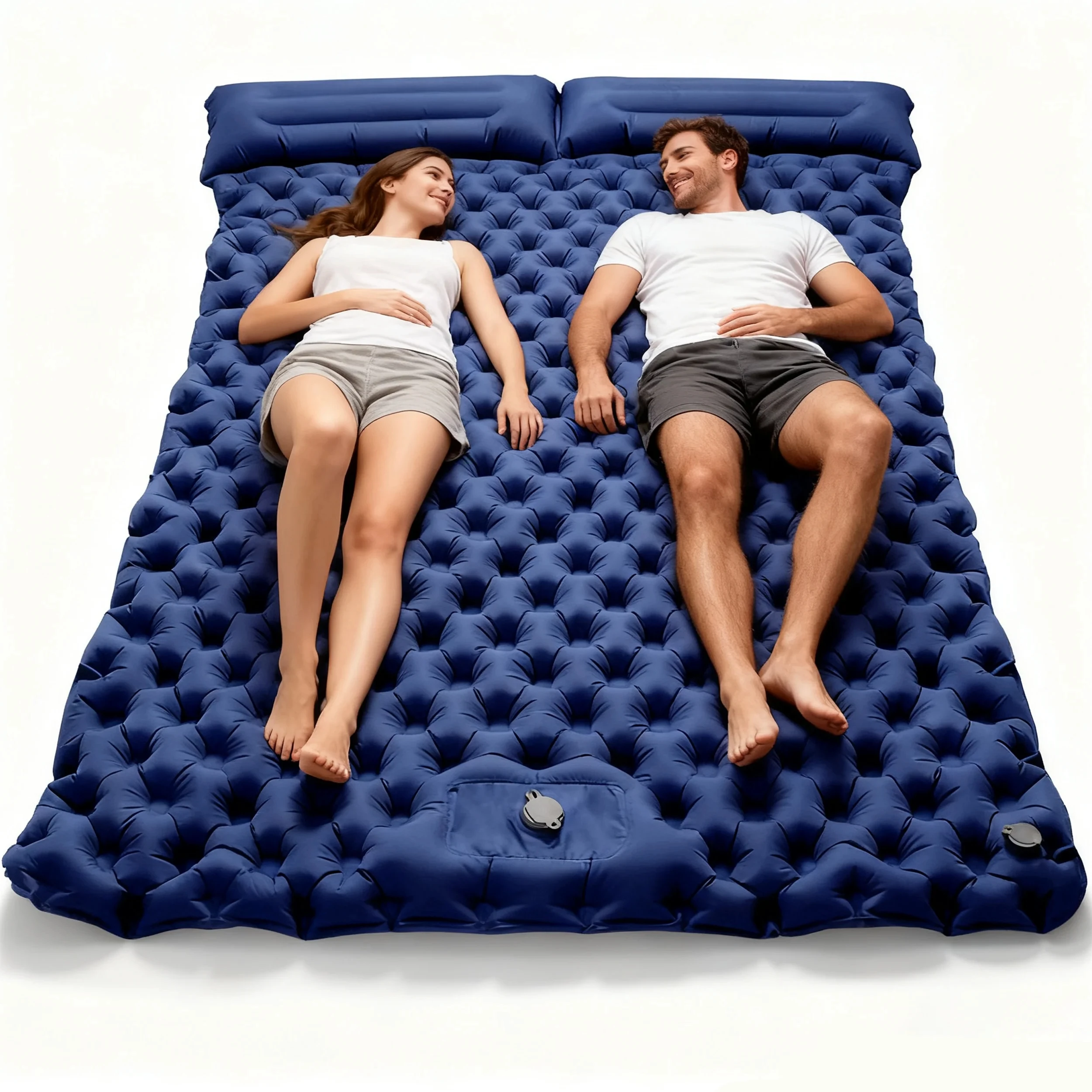
Outdoor Camping Double Inflatable Mattress
Designed for couples or spacious car-camping setups, this extra-wide mattress covers a two-person tent footprint without leaving a cold gap between separate sleeping pads. An integrated foot-press pump section allows hands-free inflation at the campsite.
- Best suited for: Couples, family tents, and vehicle sleeping platforms (SUVs and vans).
- Purchase check: Measure your vehicle interior or inner tent floor width to confirm that the full two-person layout fits your shelter before purchasing.

Mini Portable 1200mAh USB Rechargeable Air Pump
Manually inflating large-volume double mats or thick pads after a long drive or hike can be tiring. This palm-sized rechargeable pump includes multiple nozzle fittings to inflate and deflate compatible camp air mattresses and outdoor inflatables quickly.
- Best suited for: Campers using multi-chamber double beds or thick air pads who want fast, effortless setup.
- Purchase check: Verify that the included nozzle attachments match your mattress valve types (e.g., standard Boston valves vs. flat silicone purge valves).
Field Care and Setup Checklist
Always clear sharp twigs, pinecones, and stones from beneath your tent floor or footprint before unrolling an inflatable pad. When packing up in damp conditions, ensure valves are closed tight during transport, and hang the mattress to dry completely at home to prevent mildew inside the internal chambers.
When selecting your camping mattress, always balance packed bulk against the comfort and insulation demands of your destination. If you frequently camp in cold weather, prioritize independently stated R-values; if your priority is basecamp comfort, choose deeper 3- to 4-inch self-inflating foam models.